
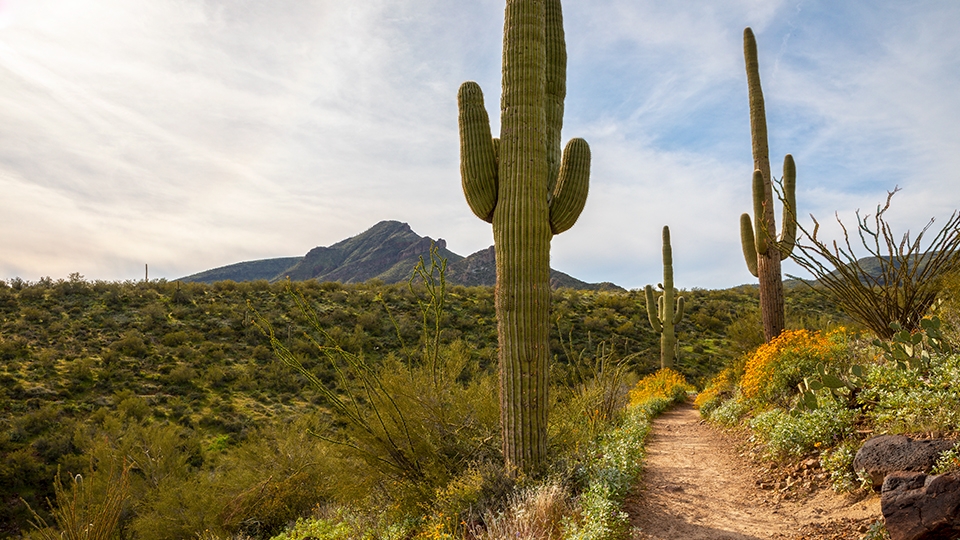
Raw Sonoran Desert, Riparian Washes, and a Less-Curated Outdoor Culture View Homes around here
Cave Creek is one of the few places in the greater Scottsdale–Phoenix corridor where hiking still feels unmanaged in the best sense of the word. Trails here are not designed to impress visitors or accommodate volume. They follow washes, ridgelines, and old routes that predate modern development, and they reward people who understand desert travel.
While the McDowell Sonoran Preserve emphasizes scale, connectivity, and a highly maintained trail system, Cave Creek offers contrast: quieter trailheads, greater ecological variety, and a more elemental relationship with the desert. This difference matters to residents. Hiking here is not a destination activity — it’s part of daily life.
The Cave Creek Landscape
Why hiking here feels fundamentally different
Cave Creek sits at a transition zone between the urban edge of North Scottsdale and the open desert stretching north toward the Tonto National Forest. That geography creates:
- Active desert washes with seasonal water flow
- Riparian corridors uncommon in Scottsdale
- Lower but more irregular foothills
- Less ambient noise and darker night skies
Trails feel wider, looser, and less engineered. You notice footing, weather, and distance more than signage or amenities.
Spur Cross Ranch Conservation Area
The core of Cave Creek hiking
The backbone of Cave Creek hiking is Spur Cross Ranch Conservation Area, a Maricopa County preserve protecting one of the most ecologically diverse desert systems in the region.
This is not a single “featured trail.” It is a network environment that supports everything from short walks to extended half-day hikes.
Terrain & Route Character
- Sandy washes following Cave Creek
- Rocky foothill climbs with gradual elevation gain
- Riparian zones with cottonwood, mesquite, and seasonal pools
- Petroglyph sites and remnants of early ranching activity
Footing varies constantly, which is why Spur Cross feels less predictable — and more engaging — than the McDowell Sonoran Preserve.
Primary Trails
- Spur Cross Trail: The main access route along the wash; low elevation gain with high scenic return.
- Metate Trail: Climbs into foothills, offering wider views and more exertion.
- Tortuga Trail: Steeper and more exposed, often used to add difficulty.
- Javelina Trail: Rolling terrain connecting multiple routes.
- Maricopa Trail (segment): Part of Arizona’s long-distance trail system, allowing for extended mileage.
Practical Considerations
- Parking: Limited compared to Scottsdale preserves; fills on weekends.
- Water: None available on-site — carry more than you think you need.
- Dogs: Allowed on leash; common here.
- Shade: Minimal outside riparian sections.
Elephant Mountain Trail
Short, steep, and locally respected
The Elephant Mountain Trail is Cave Creek’s most direct summit hike and the one locals reference when they want intensity without crowds.
This trail is defined by:
- Immediate elevation gain
- Rocky, uneven footing
- Short overall distance with no warm-up
- Clear summit payoff
From the top, views stretch across:
- Spur Cross Ranch
- Black Mountain in Carefree
- North Scottsdale foothills
- Open desert extending north
Logistics
- Parking: Roadside; limited capacity.
- Dogs: Common, but terrain is rough on paws.
- Water: Absolutely required, even in cooler months.
Elephant Mountain is often described as Cave Creek’s alternative to Camelback — physically demanding but far quieter.
Cave Creek Regional Park
Longer routes and wide-open desert
North of town, Cave Creek Regional Park offers a different experience: distance and solitude.
Trails here favor endurance and rhythm over dramatic climbs.
Notable Trails
- Go John Trail: Rolling terrain, classic Sonoran Desert scenery, excellent for long hikes or trail running.
- Quartz Trail: Adds elevation and loop options.
- Slate Trail: Steeper foothill segments for more vertical effort.
Why locals use it
- Fewer hikers than Spur Cross
- Longer uninterrupted routes
- Big-sky desert feel
Climate, Timing & Real-World Use
Cave Creek hiking is highly seasonal.
- Best months: October through April
- Summer: Early morning only; heat exposure is real
- Monsoon season: Wash crossings can change quickly
This is not casual walking terrain. Preparation matters more here than in Scottsdale preserves.
Nearby Neighborhoods & Living Patterns
Cave Creek hiking primarily serves:
- Cave Creek town neighborhoods
- Desert Hills
- Carefree-adjacent foothill communities
- North Scottsdale residents seeking quieter trail systems
Trail proximity is a meaningful factor for buyers choosing Cave Creek over Scottsdale foothills — especially those who hike frequently and value solitude over infrastructure.
Golf, Resorts & Dining Nearby
One of Cave Creek’s advantages is contrast: rugged hiking paired with refined amenities nearby.
Golf Access
- Desert Mountain (south/east)
- Troon North (short drive)
- Mirabel and Scottsdale National within reach for members
Resorts
- CIVANA Carefree
- Boulders Resort
- Easy access to North Scottsdale resort corridor

Dining
- Historic Cave Creek core (local restaurants, western character)
- Carefree dining options
- North Scottsdale dining within 15–20 minutes
Hiking here does not isolate you — it simply separates you from crowds.
Cave Creek vs. McDowell Sonoran Preserve
These systems serve different preferences.
- McDowell Sonoran Preserve: Connectivity, scale, polished access
- Cave Creek homes: Quiet, ecological diversity, less structure
Many residents use both — but choose Cave Creek because it feels less programmed and more personal.
What to Expect — Honestly
Cave Creek hiking offers:
- Fewer amenities
- Less signage
- More variable footing
- Greater solitude
What it gives back is authentic desert experience and room to breathe