
This Scottsdale Neighborhood guide will help you narrow your search of such a vast area. Scottsdale is not one simple housing market. It is a long, spread-out city with very different residential environments, from Old Town condos and central Scottsdale ranch homes to North Scottsdale master-planned communities, private golf clubs, desert foothill estates, and ultra-luxury enclaves.
That is why buyers get confused when they start with listings first.
A house in Old Town, McCormick Ranch, DC Ranch, Troon North, Desert Mountain, Paradise Valley, Fountain Hills, or Cave Creek may look similar online by price or square footage, but the daily lifestyle can be completely different.
This guide explains how Scottsdale-area real estate is organized so you can understand the area before wasting time on the wrong homes.
Start With the Area Before the House
Most buyers search backwards.
They start with bedrooms, price, square footage, and photos. Then they fall in love with a house before understanding the area around it.
In Scottsdale, that can be a mistake.
The neighborhood decision usually drives everything else:
- How quiet the home feels
- How far you are from restaurants, shopping, and medical services
- Whether the HOA fits your personality
- Whether golf is public, private, required, optional, or irrelevant
- Whether the area feels full-time residential, seasonal, investor-heavy, or resort-oriented
- How the home may perform in resale
- Whether the location fits your real daily routine
A great house in the wrong area is still the wrong buy.
Old Town Scottsdale
Central and Old Town Scottsdale are about access, energy, and convenience.
This part of Scottsdale is closer to restaurants, nightlife, shopping, galleries, spring training, entertainment, resorts, and the southern Scottsdale/Phoenix employment corridors. It can work well for buyers who want activity nearby and do not want a far North Scottsdale lifestyle.
Common property types include:
- Condos
- Townhomes
- Older single-family homes
- Remodels
- Infill construction
- Shorter-term rental-heavy pockets
- Walkable or semi-walkable areas in select locations
The tradeoff is that this area can vary dramatically from street to street. Some pockets are quiet and residential. Others are closer to traffic, nightlife, rentals, or redevelopment.
Best fit:
Old Town and central Scottsdale usually make sense for buyers who want convenience, restaurants, flexibility, and a more active lifestyle.
Potential downside:
Privacy, lot size, parking, noise, and neighborhood consistency can vary heavily.
Explore related pages:
Old Town Scottsdale
South Scottsdale
Arcadia (most of Arcadia is technically in Phoenix)
Central Residential Scottsdale
Established residential Scottsdale includes areas like McCormick Ranch, Scottsdale Ranch, Gainey Ranch, Cactus Corridor, Kierland, Stonegate, Ancala, and surrounding central/east Scottsdale neighborhoods.
These areas often appeal to buyers who want Scottsdale convenience without the activity level of Old Town or the distance of far North Scottsdale.
The appeal is usually practical:
- Mature landscaping
- Established streets
- Greenbelts, lakes, or parks in some communities
- Strong access to shopping and restaurants
- Easier daily driving than far North Scottsdale
- A mix of full-time residents and seasonal owners
- More neighborhood continuity than many urban areas
McCormick Ranch and Scottsdale Ranch are good examples of classic Scottsdale residential living. Gainey Ranch feels more gated and resort-like. Cactus Corridor offers larger lots and custom-home variety. Kierland is more shopping, dining, and lock-and-leave oriented.
Best fit:
Established Scottsdale neighborhoods usually work well for full-time residents, seasonal owners, downsizers, families, and buyers who want convenience without giving up neighborhood feel.
Potential downside:
Homes may be older, remodel quality varies, and HOA structure can change significantly from one subdivision to another.
Explore related pages:
McCormick Ranch
Scottsdale Ranch
Gainey Ranch
Cactus Corridor
Kierland
Ancala
Stonegate
North Scottsdale Master-Planned Communities
North Scottsdale includes some of the area’s best-known master-planned communities, including Grayhawk, DC Ranch, McDowell Mountain Ranch, Troon Village, Troon North, Desert Ridge, and other planned residential areas.
These communities are usually more organized than older Scottsdale neighborhoods. Buyers often find:
- Defined neighborhood boundaries
- HOA standards
- Community parks or recreation amenities
- Newer housing stock than central Scottsdale
- Better subdivision consistency
- Stronger mountain and desert influence in many pockets
- Easier comparison between similar property types
Grayhawk is often practical and convenient, with strong access to the Loop 101, shopping, dining, and medical services. DC Ranch is more polished and upscale, with community amenities and Market Street nearby. McDowell Mountain Ranch has parks, trails, schools, and strong full-time residential appeal.
Best fit:
North Scottsdale master-planned communities often work well for buyers who want organization, predictability, schools, parks, trails, and a cleaner residential structure.
Potential downside:
HOA rules, lot sizes, and community feel may be more controlled than buyers expect.
Explore related pages:
Grayhawk
DC Ranch
McDowell Mountain Ranch
Troon Village
Desert Ridge (actually in Phoenix)
Desert Foothills and Scenic North Scottsdale
As Scottsdale moves farther north and east, the land starts to matter more.
In areas like Troon North, Desert Highlands, Desert Mountain, Mirabel, Whisper Rock, Carefree, Cave Creek, The Boulders, Terravita, and parts of Fountain Hills, the real estate is shaped by desert, elevation, views, privacy, and golf.
These areas often include:
- Boulder formations
- Mountain views
- Desert washes
- Larger lots in some pockets
- Custom and semi-custom homes
- Gated and guard-gated communities
- Longer drive times
- More privacy and less commercial activity
This is where buyers need to be honest about daily life. The setting may be beautiful, but drive times to schools, restaurants, the airport, medical appointments, and shopping may be longer.
Best fit:
Desert foothill areas work well for buyers who want scenery, privacy, quiet, golf, hiking, and a more removed Arizona lifestyle.
Potential downside:
Convenience, maintenance, hillside lots, longer drive times, and club/HOA complexity can matter more than expected.
Explore related pages:
Troon North
Desert Highlands
Desert Mountain
Mirabel
Whisper Rock
Carefree (city at north end of Scottsdale)
Cave Creek (city at north end of Scottsdale)
Terravita
The Boulders
Fountain Hills (city east of Scottsdale)
Guard-Gated and Private Communities
Some Scottsdale-area communities are defined less by location and more by structure.
Guard-gated and private communities offer controlled access, architectural standards, HOA oversight, and often a more consistent long-term environment. These communities may appeal to buyers who want privacy, security, predictability, and a stronger sense of exclusivity.
Examples include:
- Silverleaf
- DC Ranch
- Desert Highlands
- Desert Mountain
- Estancia
- Whisper Rock
- Mirabel
- Ancala
- Firerock (fountain hills)
- Gainey Ranch
The tradeoff is control. Buyers need to be comfortable with architectural rules, HOA oversight, fees, maintenance expectations, rental restrictions, and sometimes private club considerations.
Best fit:
Guard-gated communities usually work well for buyers who value privacy, structure, and resale consistency.
Potential downside:
Rules, fees, club requirements, and design restrictions may not fit every buyer.
Golf Communities
Golf is one of the biggest lifestyle layers in Scottsdale real estate, but buyers need to understand that not all golf communities work the same way.
Some golf is public. Some is private. Some clubs are tied closely to the real estate. Others are nearby but separate. Some communities have golf views without automatic golf access. Some memberships may have waitlists, transfer rules, initiation costs, or changing availability.
Scottsdale-area golf real estate includes:
- Private golf communities
- Public golf course neighborhoods
- Resort golf areas
- Homes near golf but not tied to membership
- Guard-gated golf communities
- Luxury private club communities
Important golf questions include:
- Is the course public or private?
- Is membership required, optional, waitlisted, or unavailable?
- Does owning a home create any membership rights?
- Are there club transfer fees?
- Does the lot back to golf, desert, road, or another home?
- Does golf exposure help resale or narrow the buyer pool?
Best fit:
Golf communities work best when the buyer understands the club structure before choosing the home.
Potential downside:
A golf-view home is not the same thing as golf access.
Explore related pages:
All Scottsdale Golf Communities
DC Ranch Golf
Desert Mountain Golf
Grayhawk Golf
Troon North Golf
Silverleaf Golf
Estancia Golf
Gainey Ranch Golf
McCormick Ranch Golf
Paradise Valley and Arcadia
Paradise Valley and Arcadia are not in Scottsdale, but many Scottsdale buyers compare them.
Paradise Valley is one of Arizona’s premier luxury estate markets. It is known for larger lots, mountain views, privacy, custom homes, resort proximity, and central access between Scottsdale and Phoenix.
Arcadia has a different appeal. It is more neighborhood-driven, with mature trees, irrigated lots in many pockets, restaurants nearby, school demand, older ranch homes, remodels, new builds, and a more social lifestyle.
Paradise Valley usually appeals to buyers who want privacy, land, views, and estate prestige.
Arcadia usually appeals to buyers who want charm, restaurants, mature landscaping, central location, and neighborhood energy, and are willing to purchase expensive real estate.
Best fit:
Paradise Valley is stronger for estate privacy. Arcadia is stronger for lifestyle charm.
Potential downside:
Both areas can be expensive, property-specific, and heavily influenced by lot quality, street, school demand, views, and renovation quality.
Explore related pages:
Not Quite Scottsdale – Carefree, Cave Creek, and Fountain Hills
Carefree, Cave Creek, and Fountain Hills are often considered by buyers who want scenery, quieter living, golf nearby, and more space or value than prime Scottsdale.
Carefree is generally quieter, cleaner, and more polished. It often appeals to buyers who want desert views, custom homes, low-density living, and a slower pace north of Scottsdale.
Cave Creek is more western, casual, and personality-driven. It has restaurants, bars, live music, trail access, horse properties in some areas, and a stronger desert-town feel.
Fountain Hills is east of Scottsdale. It is known for hillside views, golf, the fountain, quieter residential pockets, and often better view value than comparable Scottsdale properties.
Best fit:
These areas can work well for buyers who want scenery, quiet, golf, hiking, or a less conventional Scottsdale lifestyle.
Potential downside:
Drive times, school commutes, utility setup, lot slope, HOA rules, and resale pool should be reviewed carefully.
Explore related pages:
Carefree
Cave Creek
Tatum Ranch (is in Cave Creek)
Fountain Hills
Firerock (Fountain Hills)
Eagle Mountain (Fountain Hills)
SunRidge Canyon (Fountain Hills)
Ultra-Luxury Scottsdale-Area Markets
At the top end of the Scottsdale-area market, value is driven by land, privacy, club access, architecture, views, scarcity, and long-term buyer depth.
Ultra-luxury areas include:
- Paradise Valley
- Silverleaf
- Estancia
- Desert Mountain
- Desert Highlands
- Whisper Rock
- Mirabel
- Select Cactus Corridor estates
- Select Arcadia and Biltmore properties
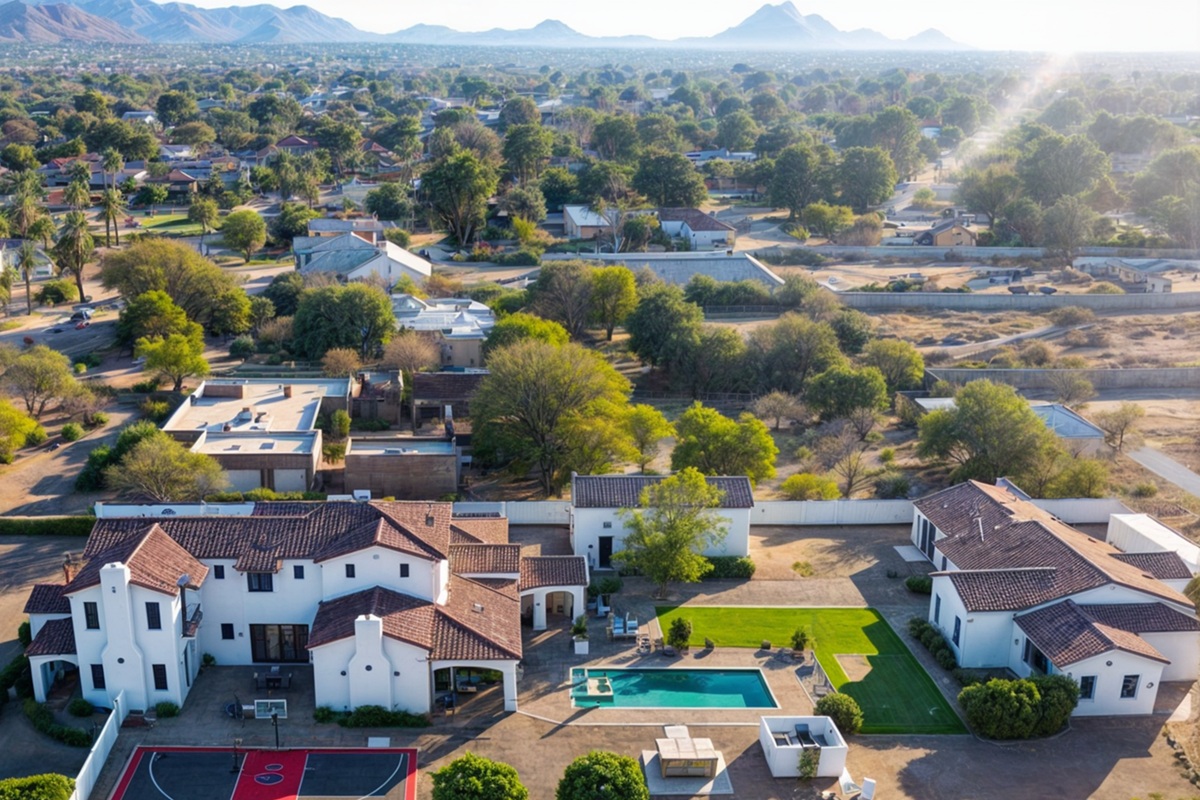
These markets should not be judged only by price per square foot. In many cases, the lot, setting, view corridor, architecture, privacy, and replacement cost matter more than square footage alone.
Best fit:
Ultra-luxury areas work best for buyers who understand that the land and setting are often as important as the house.
Potential downside:
Liquidity, maintenance cost, club structure, remodeling cost, and buyer pool depth matter more at the upper end.
Scottsdale Neighborhood Comparisons
Some Scottsdale-area neighborhoods look similar online but live very differently in real life.
That is why side-by-side comparisons can help.
Examples include:
- Grayhawk vs DC Ranch
- McCormick Ranch vs Gainey Ranch
- Desert Mountain vs Troon North
- Silverleaf vs Estancia
- Cactus Corridor vs Paradise Valley
- Arcadia vs Paradise Valley
- Carefree vs Cave Creek
- Fountain Hills vs North Scottsdale
- DC Ranch vs Troon North
These comparisons help buyers understand differences in location, lifestyle, golf, HOA structure, schools, pricing, privacy, resale appeal, and daily convenience.
Explore related page:
Compare Scottsdale Neighborhoods
How to Use This Site
A productive Scottsdale home search usually works in this order:
- Understand the major Scottsdale-area environments.
- Choose the areas that match your lifestyle.
- Compare similar neighborhoods side by side.
- Review individual neighborhood and golf community pages.
- Then search homes with the right context.
That sequence prevents wasted time.
It also prevents the most common mistake: falling in love with a house before understanding the area.
Need Help Choosing the Right Scottsdale Area?
Scottsdale Real Estate Associates helps buyers and sellers understand how Scottsdale-area neighborhoods actually compare.
That includes location, lifestyle, golf access, HOA structure, schools, views, lot quality, ownership costs, resale demand, and long-term fit.
If you are deciding between Scottsdale neighborhoods, golf communities, Paradise Valley, Arcadia, Carefree, Cave Creek, or Fountain Hills, contact Scottsdale Real Estate Associates for a direct side-by-side review before narrowing your search.
Contact SREA